Mei Jing Dong Wang
PROPERTY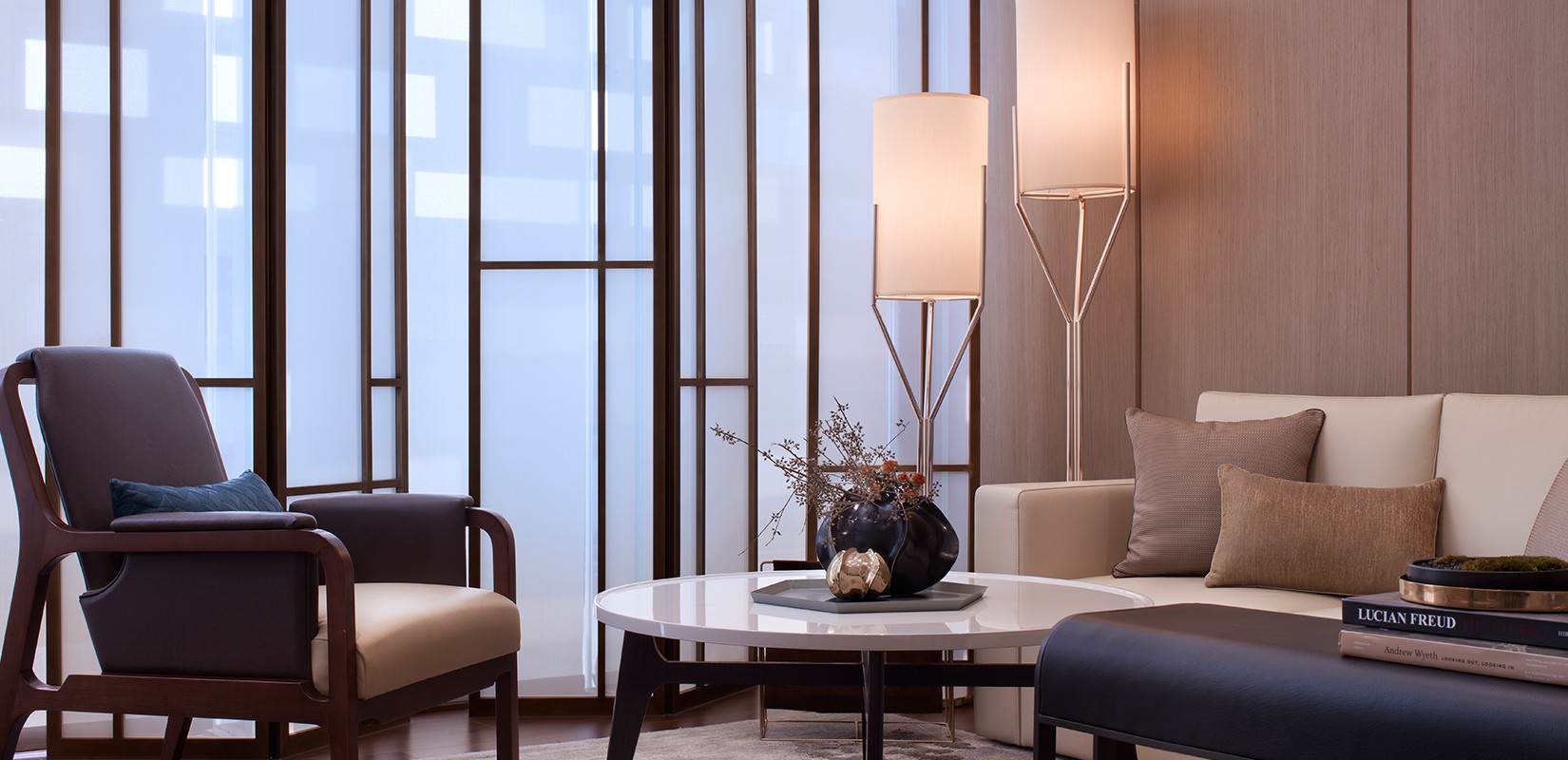
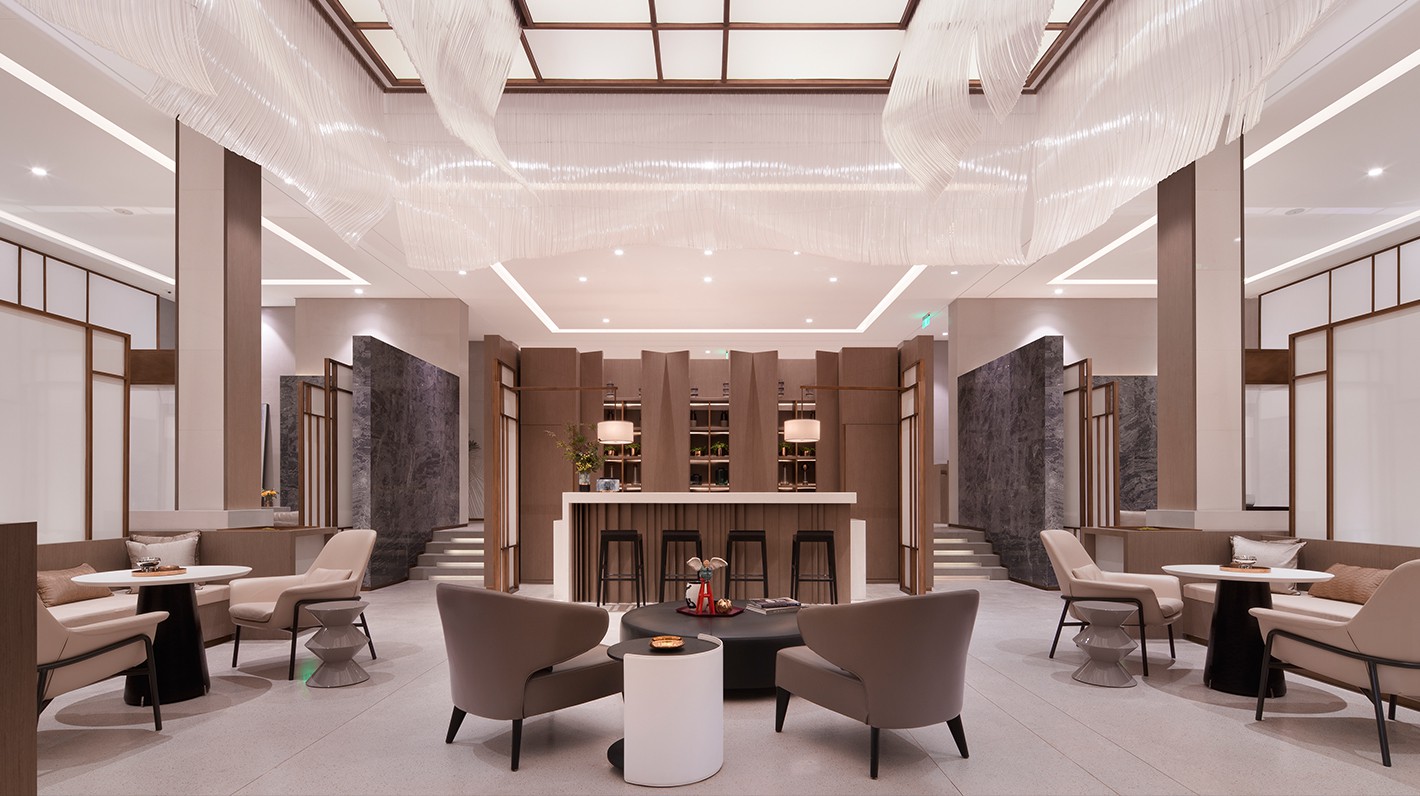

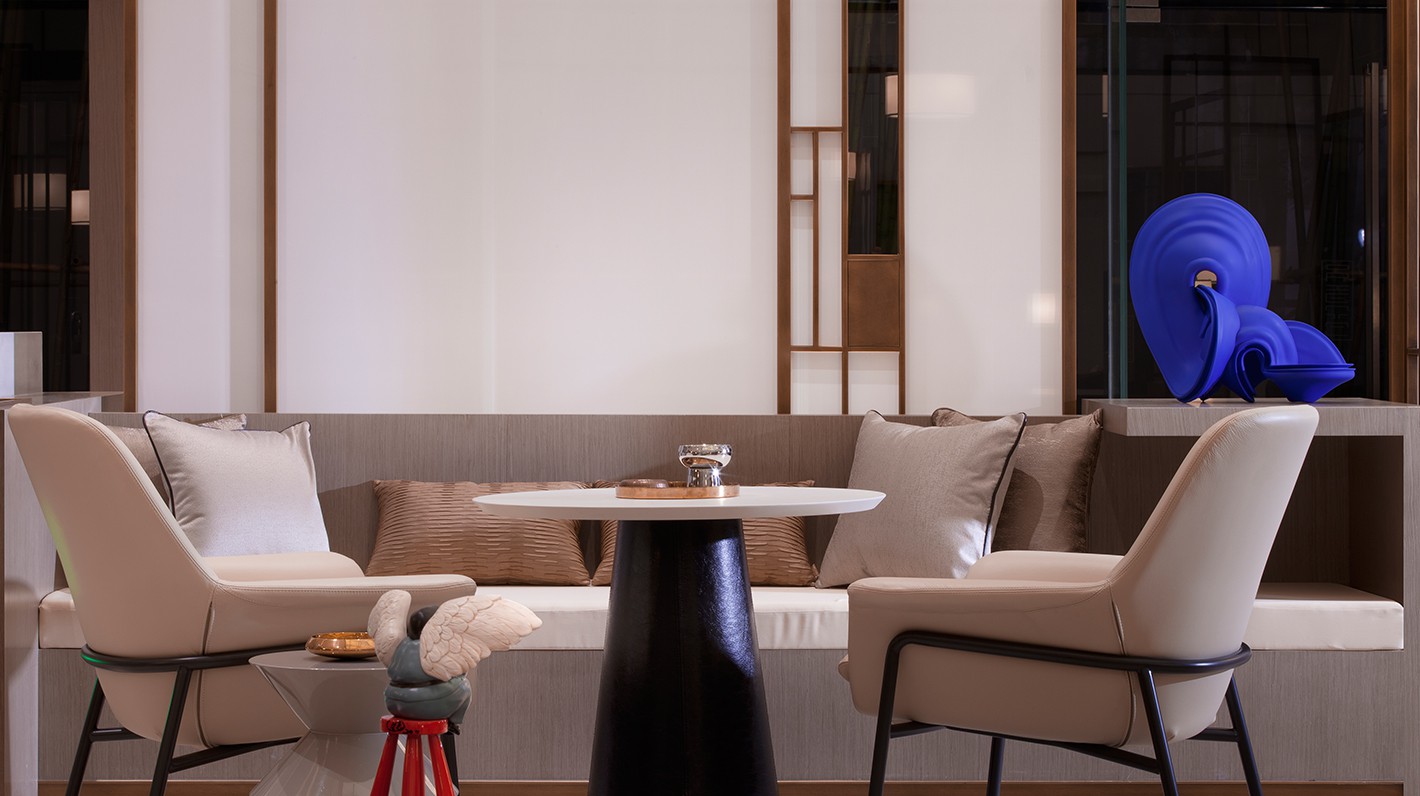
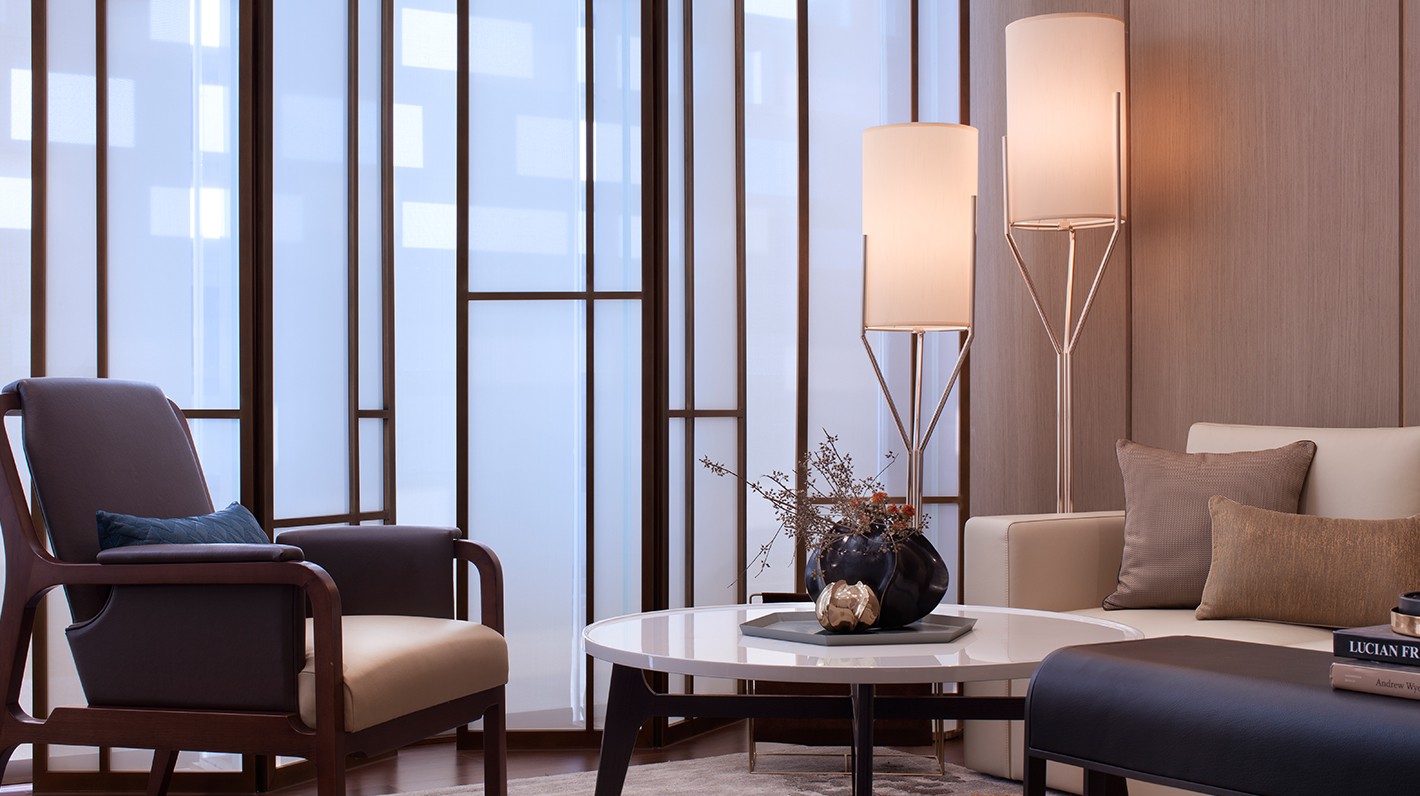
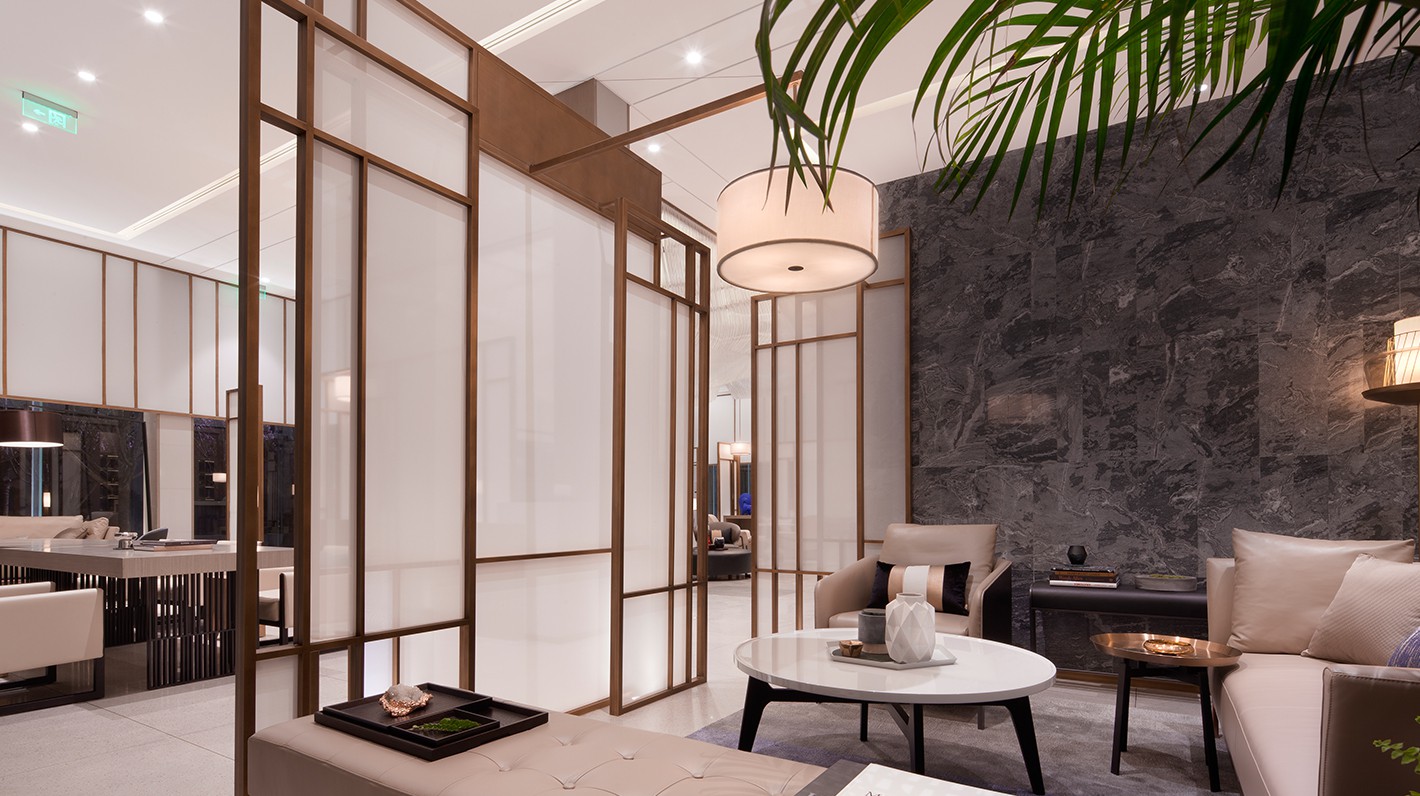
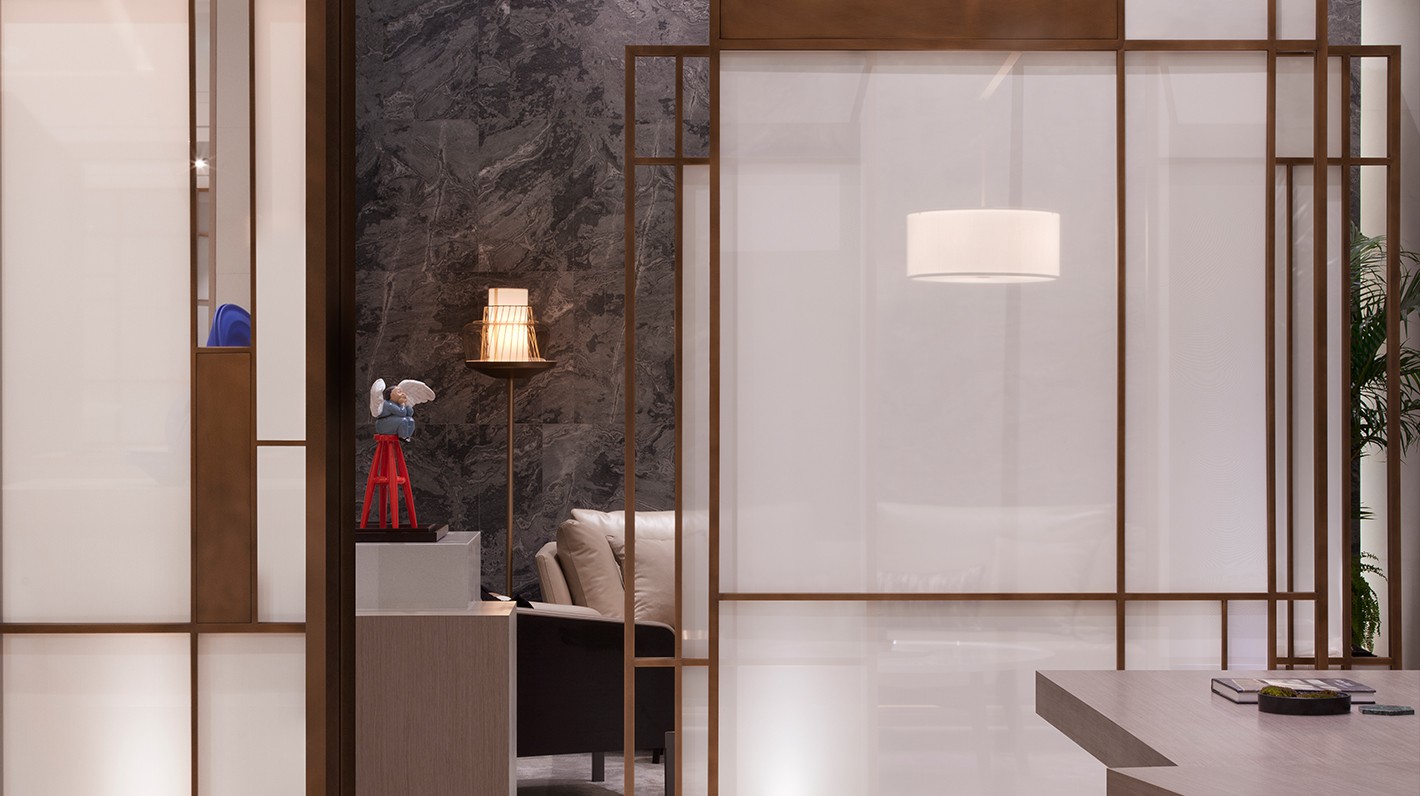
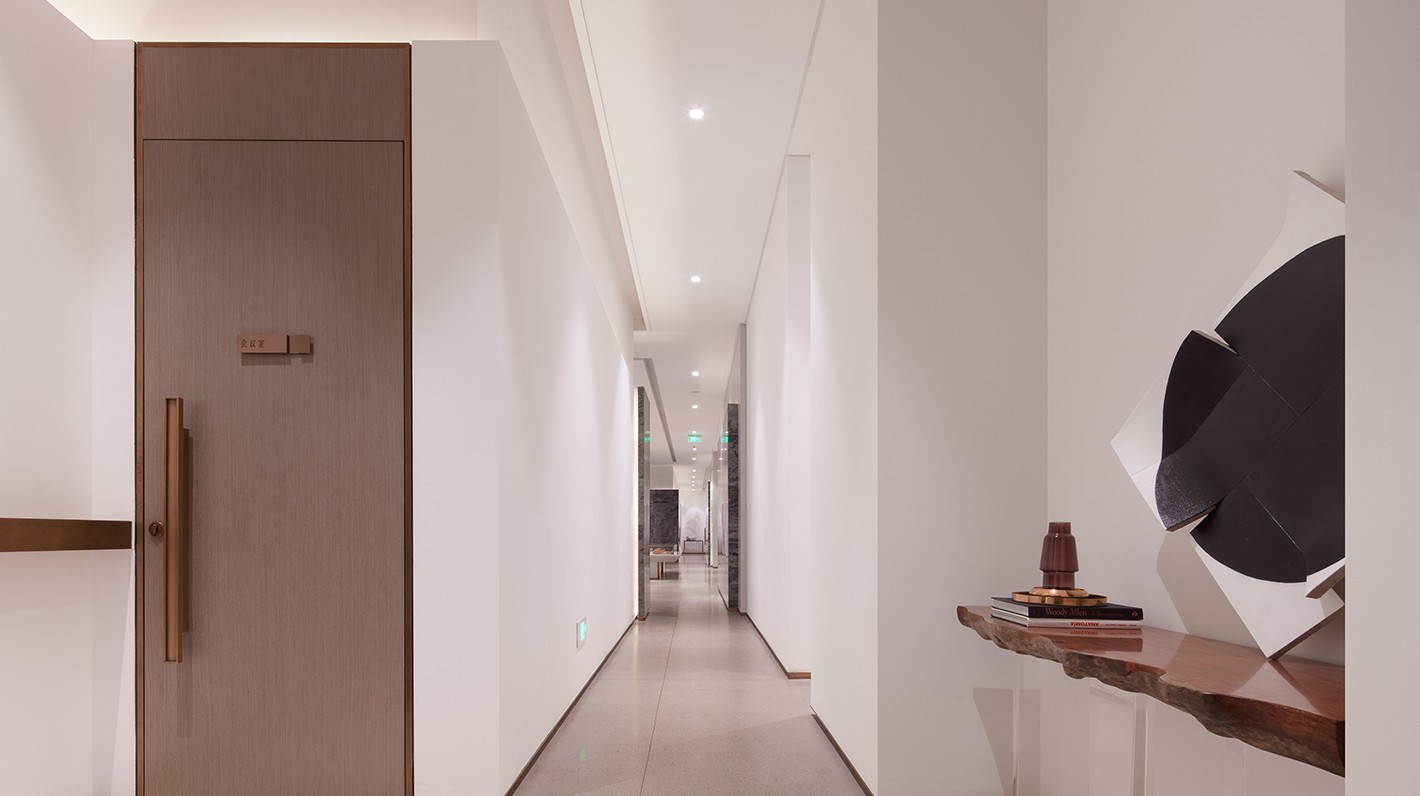
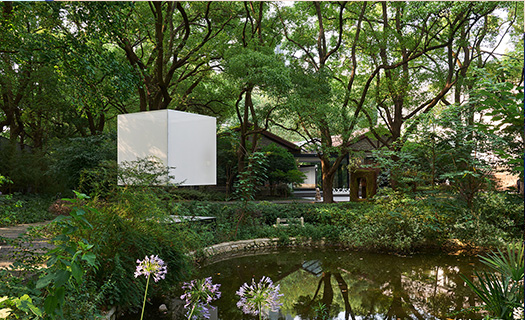
The garden is interspersed with trees, flowers, grass, walls, stones, and water, owning a sense of intimacy, tranquility, and privacy. Dense branches form a tunnel that could be both admired aesthetically and walked through. The boundaries between the garden and the building are blurred and the space becomes lively.
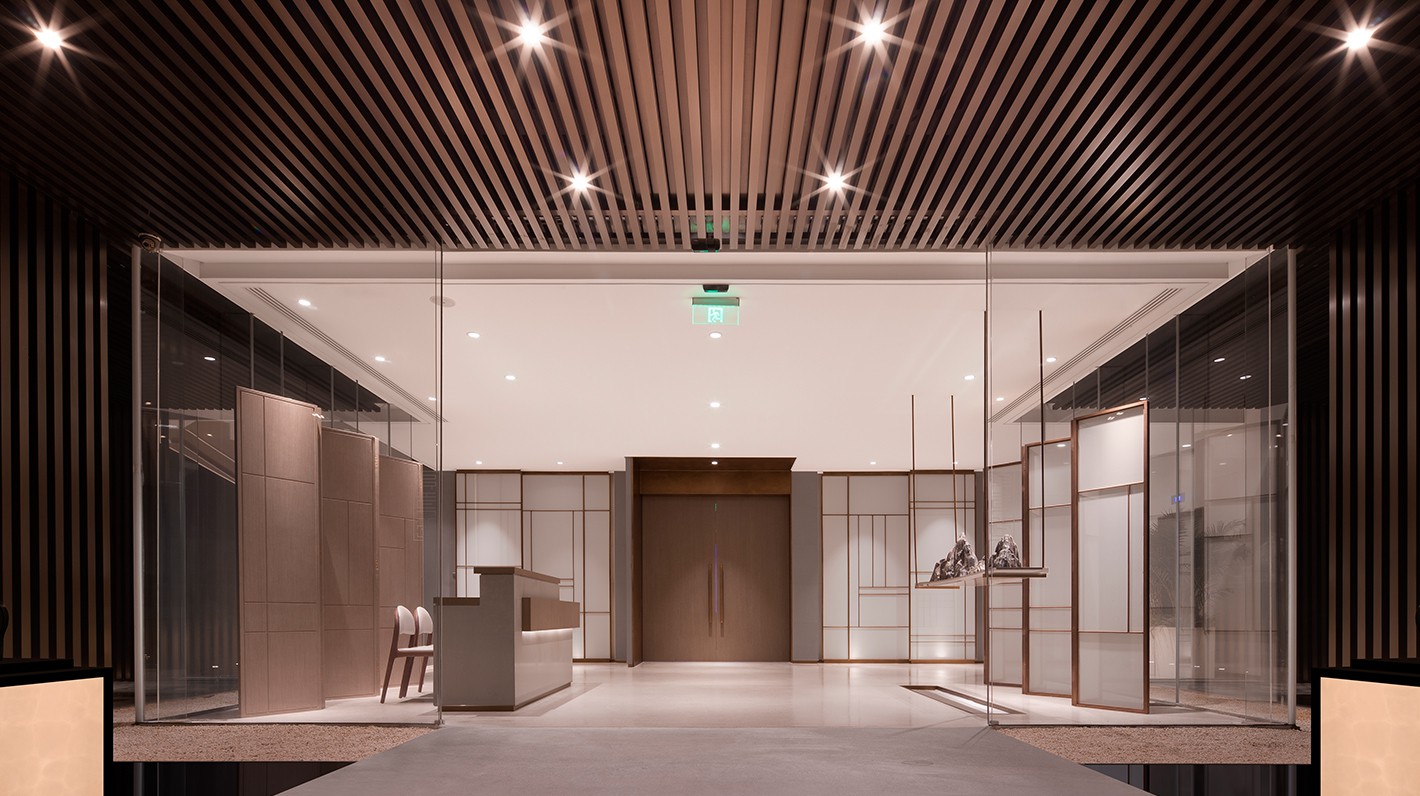
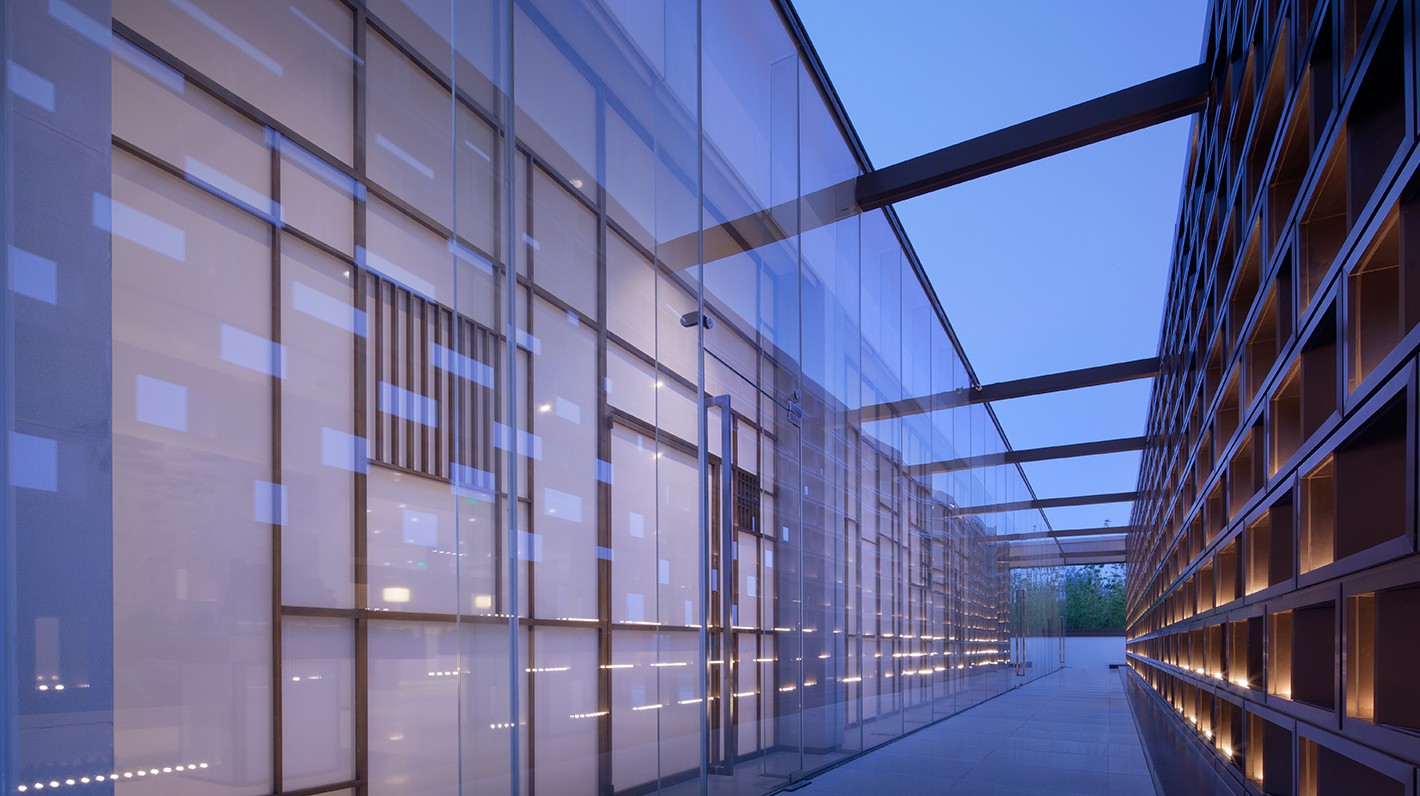
Going forward, water surface, light, and walls form a semi-enclosed space. A clear ‘glass box’ is embedded in the thick grey shell, seemingly semi-transparent and floating.
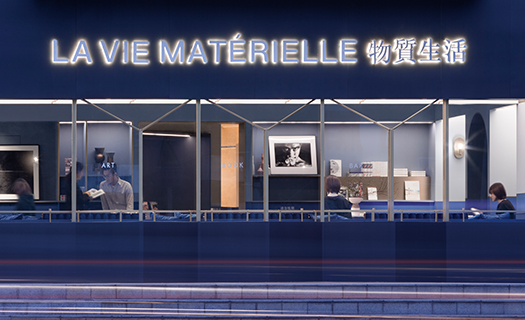
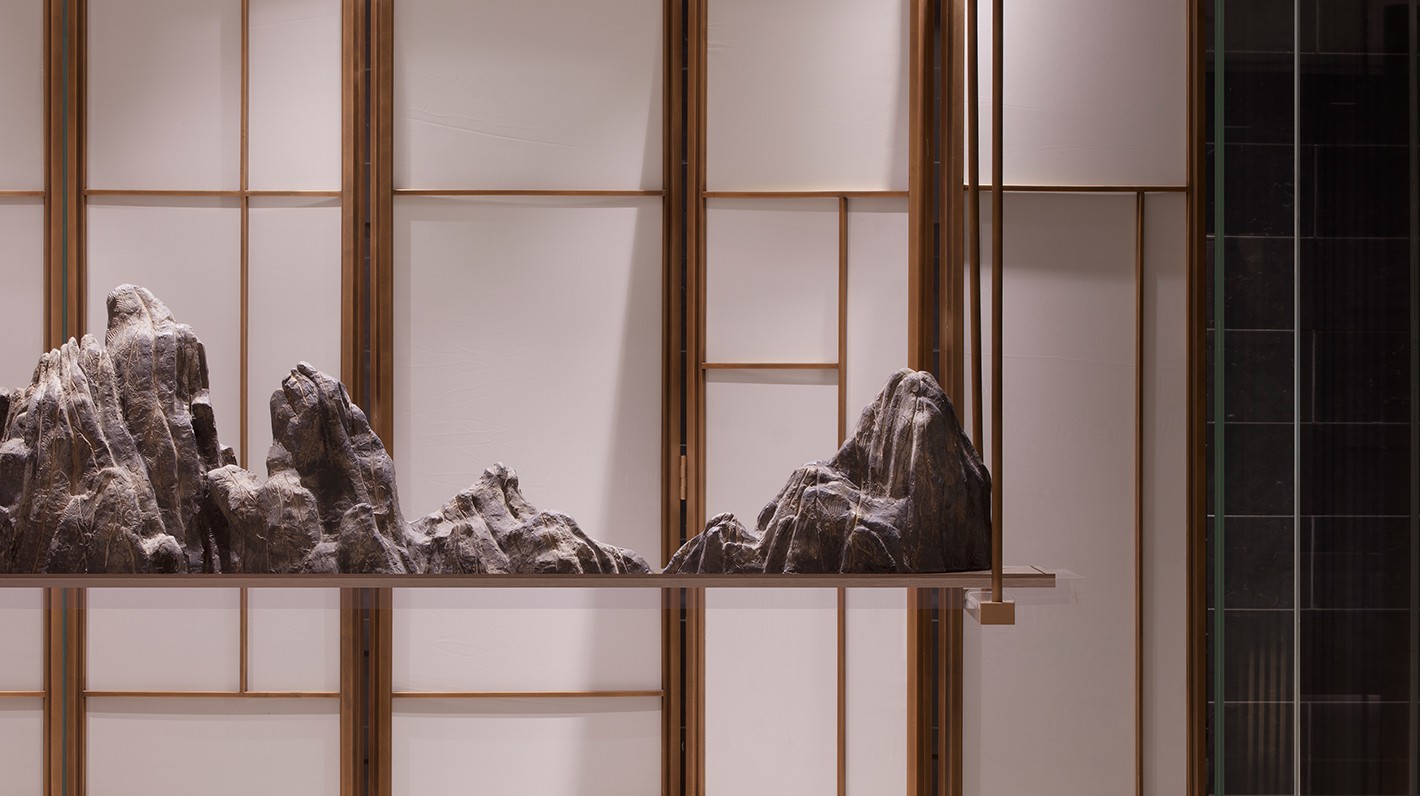
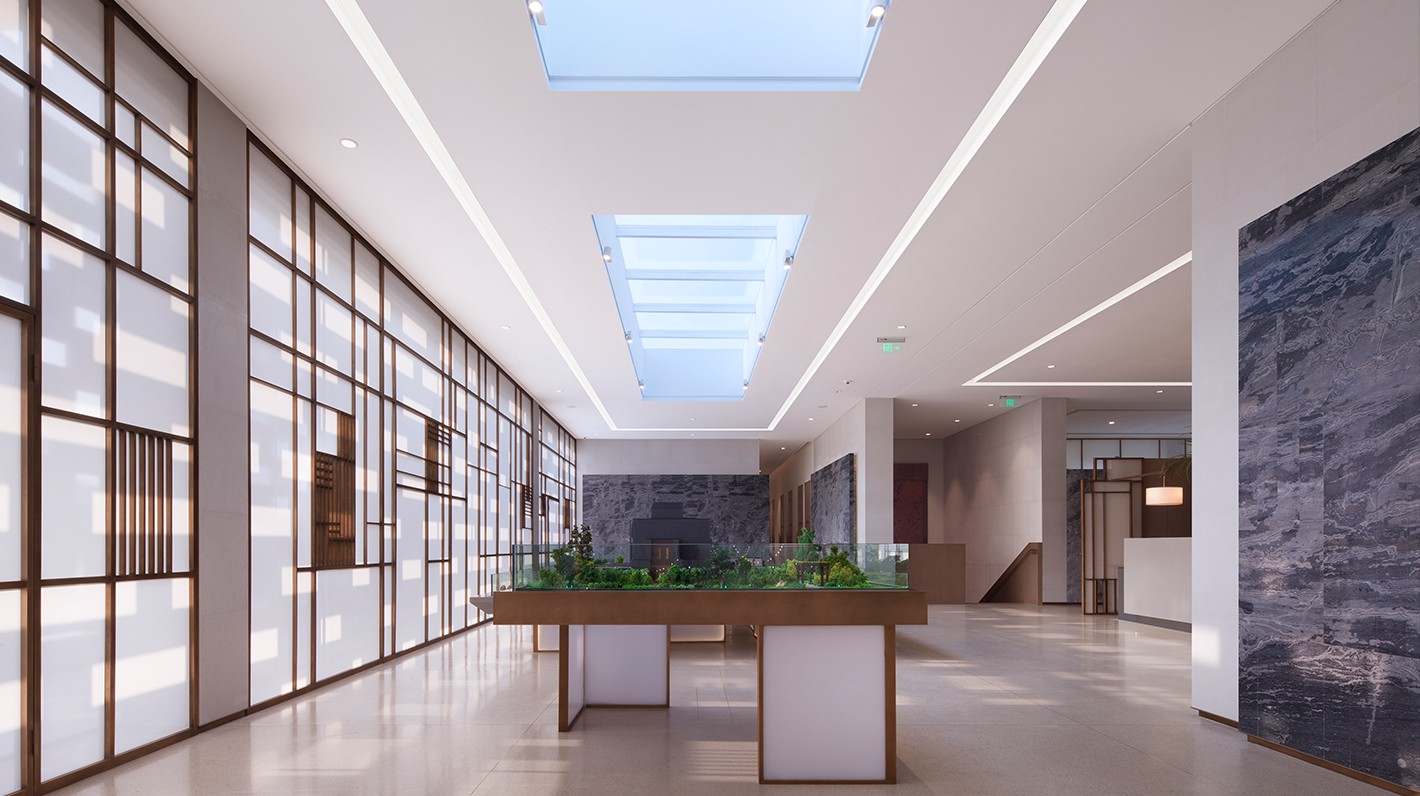
The reception area is filled with ambiguities, quietness, and obscure elements. Space, light, level of transparency, and all other nature of a variety of materials could be explored by eyes. The ceiling and the ground are weakened. The transparent façade uses the overlapping, interlacing, and juxtaposition between lines and planes to extend the visual composition of the horizontal space to the three-dimensional space, creating a subtle sense of ‘lightness’. Distressed copper, spun silk, autumn wood, and rustic terrazzo balance virtual and reality, establish the basic construction relationship of the space, and form the internal tension. Art comes into being, and the "mountain" becomes light at this moment.
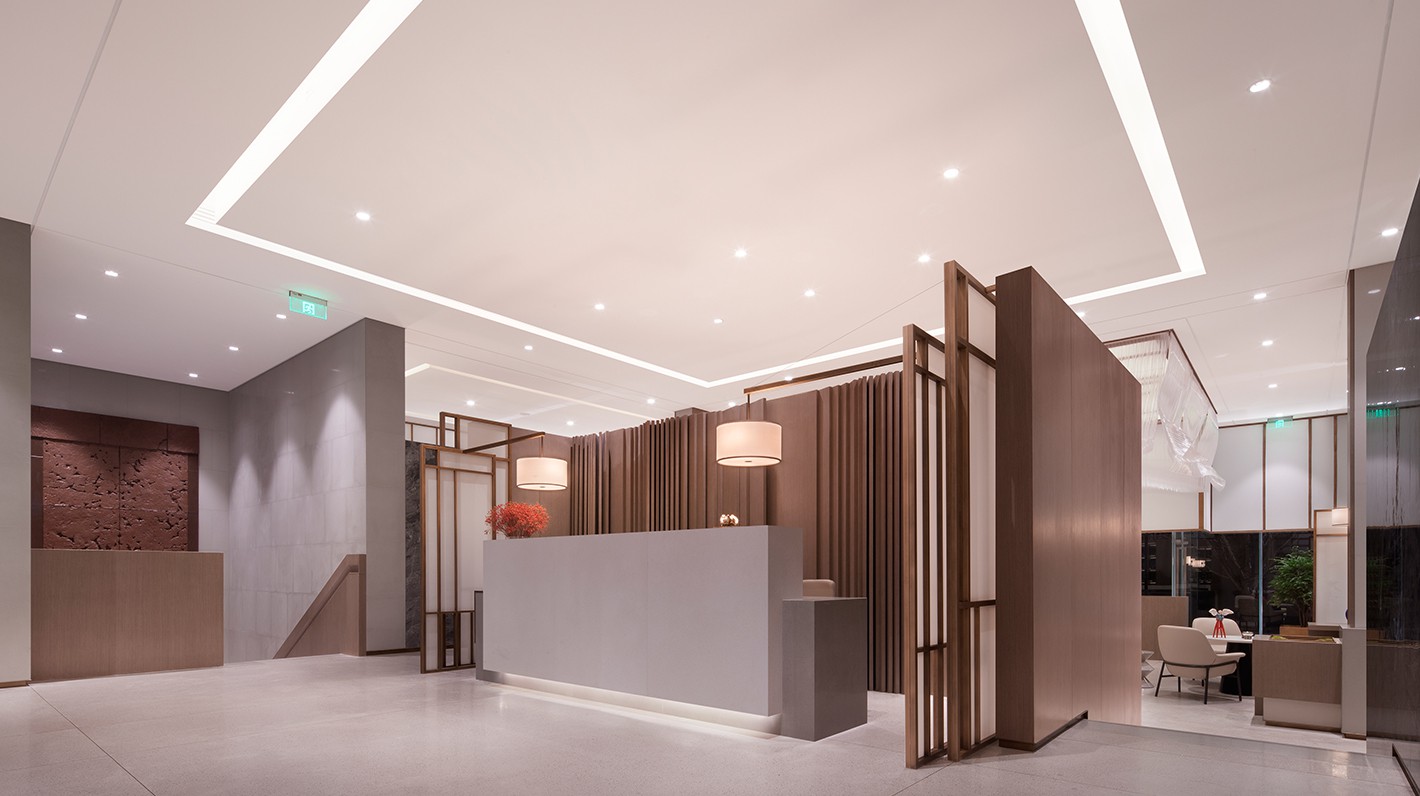
Stepping up the stairs, the wooden functional ‘box’ defines two large spaces, independent but are not completely separated. One side is the area for negotiation. The simple structure of the architecture is weakened to the level that only the basic transparent borders are shown, and is naturally incorporated into the plane. The water surface reflects the building, and the inside and the outside become a whole, penetrating each other to achieve physical transparency. The internal space becomes a frame, embracing the environment, and reflects the surrounding.
The project thinks about how to ‘cover’ in a “transparent” environment with three sides open without losing the natural beauty. Spun silk is used in multiple ways: separated, overlapped, or hanged to form a rhythm, so that “transparency” does not have the risk of completely losing privacy. While controlling and guiding the tour in the space, the power of nature - Sunlight, air, and water are smoothly acquired and add in some fascinating changes. A gentle temptation is formed when sight is partially blocked and the spatial metaphor is felt.
Heavy gray stone, constructed spun silk and hanging lights form a half-height enclosure that draws people closer to the space. In the use of furniture, the cultural attributes are stripped, and people's feelings and the function of negotiation are emphasized.
The other side is the model area. The light that is forcibly divided by the building blocks is softened and redefined by the translucent inside. The direct light, the gentle light and the artificial light interact to enrich the space expression.
The design of this project uses ‘the hidden expression of culture’ to return to the essence of space and ‘the same type of construction techniques’ to circulate space temperament, ‘feel the natural way’ to derive spatial methods, and "use natural materials" to promote internal and external integration. It is also an attempt to let the space to break the boundary.